

When Sex Means Different Things: How Hidden Wounds Turn Intimacy Into a Fight
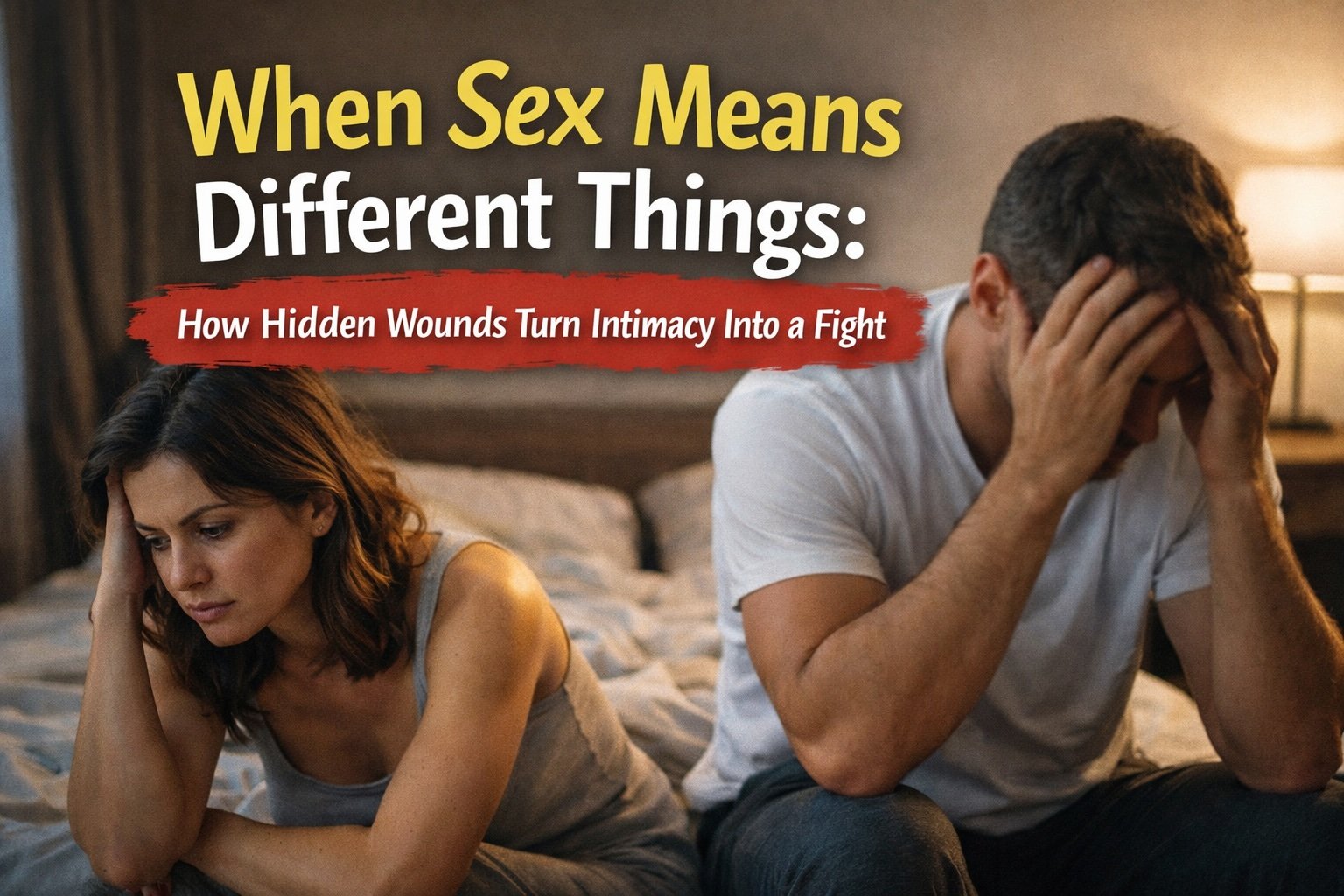
It starts with a moment most couples recognize.
A hand reaches. A body stiffens.
A kiss lands—then evaporates.
Someone tries again later. Someone sighs.
And suddenly you’re arguing about “always” and “never,” when what you’re really fighting about is meaning.
Because sex in long-term relationships is rarely just sex. It can become:
a way to feel close
a way to feel wanted
a way to calm down
a way to escape
a way to prove the relationship is okay
a place where old injuries get touched—fast
When partners don’t share the same meaning around sex, it can come out as attacking each other instead of naming what’s actually happening inside.
The Fight Under the Fight
Many couples think they’re fighting about:
frequency
initiation
porn
novelty
mismatched libido
“effort”
But clinically, a lot of couples are fighting about what sex represents:
For one partner, sex often means: connection, reassurance, being chosen.
For the other, sex often means: pressure, performance, risk, or feeling used.
Neither is “wrong.” They’re different nervous system experiences.
Two Couples, Same Topic, Totally Different Meanings
Couple #1: “Sex means we’re okay.”
One partner feels close through sex. When stress hits, they initiate more.
Underneath, it’s:
“I miss you. I need to feel us. I need to feel wanted.”
What comes out:
“You never want me anymore.”
“We’re basically roommates.”
Couple #2: “Sex means I’m failing.”
The other partner needs emotional safety for desire. When they sense pressure, their body shuts down.
Underneath, it’s:
“I can’t open up when I feel evaluated. I need warmth and safety first.”
What comes out:
“That’s all you think about.”
“Stop making everything about sex.”
Both are trying to protect something tender. It just looks like combat.
When Sex Becomes a Coping Skill (and a Flashpoint)
This is more common than people realize: sex can become emotional regulation.
Not inherently unhealthy. But it matters when it becomes the main way someone copes, or when partners have very different interpretations of what’s happening.
Sex as soothing
For some people, sex helps with:
anxiety relief
loneliness
reassurance
stress downshift
feeling connected again
So they want sex most when life feels heavy—not because they’re shallow, but because sex is a fast route to feeling safe.
Sex as escape
For others, sex can function like a temporary exit:
from shame
from emptiness
from conflict
from vulnerability
from feeling out of control
Sometimes it’s conscious. Often it isn’t. It just feels urgent.
Where couples collide:
One partner experiences sex as reconnecting. The other experiences it as bypassing.
“We haven’t talked all week, and now you want sex?”
Injuries Around Sex and Intimacy (The Quiet Ones Count)
Sex “injuries” aren’t always big events. Often they’re small moments that accumulate until the body learns a lesson: this isn’t safe.
Relational injuries
repeated rejection without warmth or repair
initiation that ignores context (disconnection, conflict, resentment)
sulking, anger, or guilt after a “no”
criticism or comparison
betrayal (porn secrecy, emotional affair, affair)
boundary violations (pushing, minimizing discomfort)
Body-based injuries
pain with sex (dyspareunia, vaginismus, pelvic floor issues)
postpartum and hormonal shifts, menopause
medication effects, illness, fatigue, burnout
body image distress and shame
When injuries are present, desire isn’t a moral decision. It’s often a protective response.
The Cycle That Turns Pain Into Attacks
Here’s the loop that traps a lot of couples:
One partner initiates (seeking closeness or relief).
The other hesitates or declines (seeking safety or autonomy).
The initiator feels rejected → protests (pressure, criticism, sarcasm).
The other feels unsafe → withdraws (shutdown, avoidance, dread).
Both feel alone → the next attempt carries more fear and more meaning.
Over time, sex becomes proof:
proof of love, proof of desire, proof of commitment, proof the relationship is okay.
And when sex becomes proof, it stops being playful—and starts being heavy.
A Reframe That Helps Immediately
Instead of: “Who’s right?”
Try: “What is sex doing in our relationship right now?”
Because often the truth is:
one partner is reaching for sex to feel secure and connected
the other partner is avoiding sex to feel safe and unpressured
That’s not incompatibility. That’s an untranslated mismatch.
How to Make This Better (Without Making It a Trial)
1) Name meaning, not character
Swap “you are” statements for “this represents” statements.
Instead of: “You only want sex.”
Try: “When sex comes up without emotional connection, my body feels pressure and closes.”
Instead of: “You never want me.”
Try: “When we’re not sexual, I start telling myself I’m not wanted, and I get scared.”
2) Make initiation consent-positive (for both partners)
Try language that protects the relationship even when the answer is no:
“Would you be open to closeness—cuddling, making out, or sex? Any of those would feel good.”
“If it’s a no, I won’t punish you. I still want to be close.”
“Can we do touch with no expectation and see what happens?”
When “no” is safe, “yes” becomes more possible.
3) If sex is coping, build other coping together
If sex is the only soothing strategy, it gets loaded.
Add options:
10-minute decompression ritual (phones down, nervous system downshift)
affection that is explicitly non-escalating
planned date time that isn’t a performance
sleep protection and load-sharing (desire needs bandwidth)
4) Repair resentment and betrayal outside the bedroom
If there’s secrecy, inequality, contempt, or unresolved hurt, sex will often feel like a trap.
Repair first. Rebuild intimacy second.
5) Try a bridge plan (instead of a demand)
Bridge plans increase safety and closeness at the same time:
Cuddle agreement: touch is welcome; no escalation unless both opt in
Green light / red light lists: what helps me open vs what shuts me down
Sensate-focus style touch: slow, non-goal touch to retrain safety and pleasure
Reassurance rituals that don’t require sex (words, affection, planned connection)
Red Flags vs. Normal Misattunement
Mismatched desire is common. Miscommunication is common.
But these are not “normal relationship quirks”:
coercion (guilt, anger, sulking, threats after a no)
repeated boundary crossing
humiliation or contempt
sex used as punishment or control
persistent pain that’s ignored or minimized
If any of these are present, support from a couples therapist and/or certified sex therapist can help interrupt the cycle and protect both partners.
A Script for the Moment You’re About to Fight
“I think sex is touching something tender for both of us.
For me, sex represents .
When happens, I feel , and I start telling myself .
Can you tell me what sex represents for you—what are you protecting?”
That shift—toward meaning—often lowers the temperature fast.
Closing: You’re Not Broken. You’re Untranslated.
When couples keep hurting each other around sex, it’s rarely because one person is “too much” and the other is “not enough.”
More often, sex has gotten overloaded—by stress, unmet needs, old injuries, fear of rejection, fear of pressure, or attempts to cope.
The path forward usually isn’t “try harder.” It’s:
translate the meaning
repair the injuries
build safety and consent
widen the ways you connect
And from there, intimacy can become mutual again—less like a test, and more like a place you meet each other.
