

Perinatal Depression: The Clinical Truth in Human Language
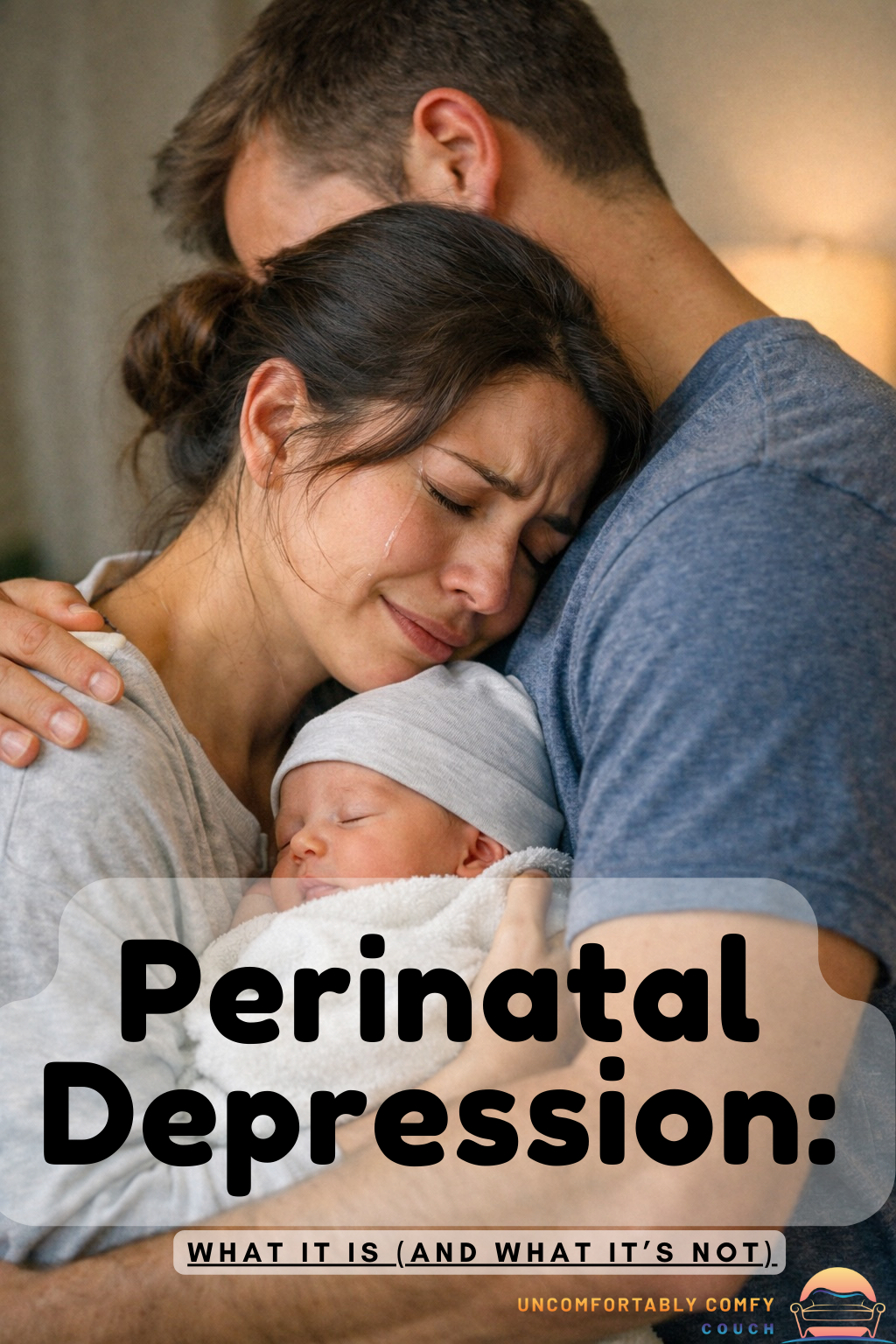
If you don’t feel like yourself, there’s a reason
If you’re pregnant or recently had a baby and you keep thinking, “Why don’t I feel like myself?”—I want you to know this: you’re not alone, and you’re not failing. Perinatal depression is a treatable medical mood disorder that can happen during pregnancy or anytime in the first year after birth. It doesn’t only affect people with “hard stories.” It can show up in families with support, in planned pregnancies, in homes where everything looks fine from the outside. That’s one of the reasons it can feel so isolating—you may assume you should be doing better, when what’s actually happening is your nervous system is overwhelmed.
What perinatal depression can look like (in real life)
A lot of people expect depression to look like constant sadness. Clinically, it can—but perinatal depression often shows up in more complicated ways. You might feel flat, numb, or emotionally distant, like you’re moving through the day on autopilot. You might feel easily irritated, quick to snap, or flooded with anger and then crushed with guilt afterward. For some people it’s anxiety that won’t shut off—racing thoughts, dread, constant scanning for what could go wrong. Sleep can be disrupted in a specific way too: you may be exhausted but unable to sleep when you finally get the chance, or you may sleep and still wake up feeling depleted. Brain fog is common. So is the sense that everyday tasks—texting someone back, making a decision, getting in the shower—take more effort than you think they “should.”
Intrusive thoughts: common, scary, and treatable
One thing I wish more people knew is that intrusive thoughts can be part of perinatal depression and anxiety. These are unwanted, upsetting thoughts or images that pop in and feel frightening. Clinically, these thoughts are often distressing because they don’t match who you are—having them does not mean you want to act on them. People stay quiet about this out of shame, but silence tends to make the thoughts louder. When you bring them into the open with a trained professional, they become something we can treat rather than something you carry alone.
“Is this just baby blues?”
The “baby blues” are common and usually show up in the early days after birth. They often peak around days three to five postpartum and then ease within about two weeks. Perinatal depression is different: it lasts longer, feels more intense, or can appear later—sometimes weeks or months after birth. If you’ve been feeling persistently low, numb, irritable, or anxious for two weeks or more, or if your symptoms are interfering with daily functioning, it’s worth reaching out. You don’t need to hit a crisis point to deserve support.
Why it happens (and why it’s not your fault)
From a clinical lens, perinatal depression usually isn’t caused by one thing. It’s often the result of a perfect storm: hormonal and physiological shifts, recovery stress, identity and role changes, relationship strain, a heavy mental load, and—most importantly—sleep deprivation. When sleep is fragmented, the brain has less capacity to regulate mood, stress, and emotion. Add in past experiences of depression, anxiety, trauma, or a difficult pregnancy/birth, and symptoms can escalate quickly. None of this is about strength or gratitude. It’s about how human bodies respond under sustained strain.
What helps (evidence-based, practical, and realistic)
There are effective treatments, and most people do best with a layered approach. Therapy is strongly supported, especially CBT (which helps with depressive thought loops and rebuilding momentum) and IPT (which focuses on role transitions, relationships, and support). Medication can also be an appropriate and very helpful option, particularly for moderate to severe symptoms, and a perinatal-informed prescriber can help you make choices that fit pregnancy or lactation.
I also want to say clearly: practical support is clinical support. Protecting sleep, reducing mental load, and getting consistent help with food, household tasks, and baby care can shift symptoms in a real way. Even one uninterrupted block of four to five hours of sleep can make a noticeable difference in mood and coping. And when you’re in the thick of it, small steps matter more than perfect routines—water, protein, a few minutes outside, a short shower, one text to a safe person. These aren’t cures, but they’re footholds while you build real support.
What partners can do (that actually makes a difference)
If you’re supporting someone with perinatal depression, the goal isn’t to cheerlead them into feeling better—it’s to make the load lighter and the environment more regulating. Believing them matters. Taking initiative matters. Practical help like meals, laundry, scheduling, taking a baby shift, or handling communication with family can be deeply therapeutic. One of the most powerful sentences a partner can say is, “I believe you. This is real. We’re going to get help together.”
In the hard moments, co-regulation is often more helpful than problem-solving. Slowing your voice, softening your body language, staying close, and offering simple choices can help the nervous system settle. “I’m here. You’re not alone. Do you want a hug, quiet company, or for me to take the baby for twenty minutes?” That steadiness is not small—it’s treatment support in real time.
A gentle call to action
If any of this sounds familiar, let this be your permission to reach out today—not because things are “bad enough,” but because you deserve care now. Send a message to your OB/midwife, primary care provider, or therapist and say, “I’m not feeling like myself, and I’d like to be screened for perinatal depression.” And if you’re a partner reading this, start with one concrete act of support—protect a sleep block, take a task off their plate, or help schedule the appointment. This is treatable, help is available, and you do not have to carry it alone.
