


First Responders
First responders, Law enforcement, and Veterans
You’ve learned how to handle everything.
This is a space where you don’t have to.
There’s a kind of pressure that comes with being on the front line that most people don’t fully understandbecause it’s not just about what you do, it’s about what your system has had to become in order to do it.
You’re trained to read a room in seconds. To scan for exits. To assess tone, movement, risk often before anyone else even realizes something is off. Your body has learned to stay alert, ready, and prepared for anything at any given moment. And that level of awareness isn’t something you can just turn off because your shift ended.
Over time, that way of functioning becomes your baseline.
It follows you home in subtle and not-so-subtle ways. In the way your body stays tense even when you’re trying to relax. In how sleep feels inconsistent or restless. In how quickly you react to things that didn’t used to bother you. In the distance that can grow in relationships not because you don’t care, but because your system hasn’t fully left “work mode.”
And for many people, there’s also that quiet internal narrative:
“This is just part of the job.”
“I should be able to handle this.”
And the truth is you have been handling it. You’ve adapted in ways that have allowed you to function, to show up, to get through things most people will never experience.
But there comes a point where surviving well doesn’t always translate to living well.
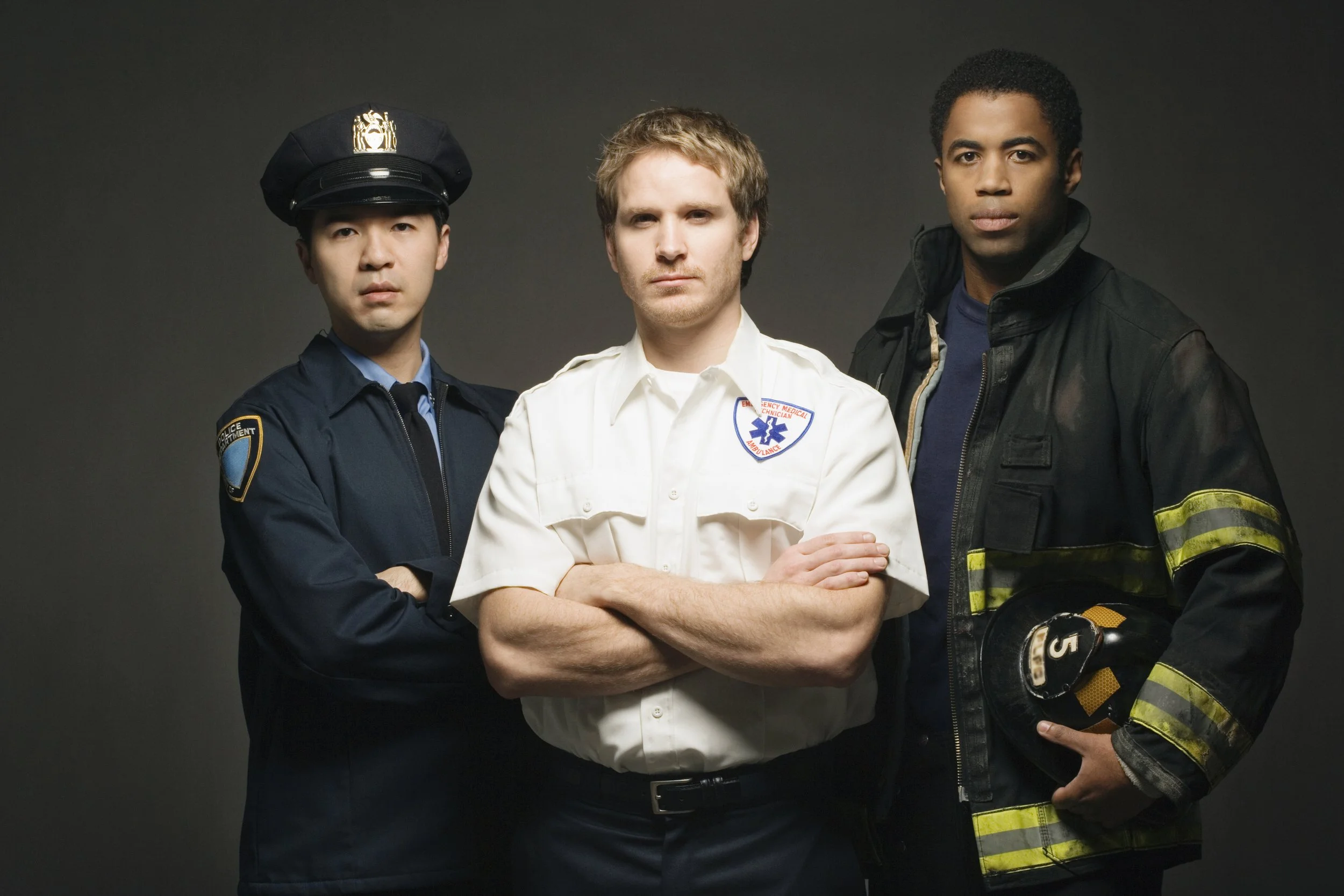

This Work Is Personal
I’m Jennifer French, and before becoming a therapist, I spent nearly a decade working as a Correctional Officer in Colorado.
I understand this work from the inside not just clinically, but experientially. I know what it’s like to rely on control, emotional shutdown, and constant awareness just to navigate a shift safely. I know how quickly your system learns to compartmentalize, to push things down, to stay focused no matter what’s happening internally.
And I also know what happens when those same survival responses don’t shift when you leave that environment.
What once protected you can start to create distance from yourself, from others, from the life you’re trying to be present in.
There can be a fear in slowing down. A hesitation in letting your guard down. A sense that if you stop holding it all together, everything you’ve been managing might catch up to you.
Therapy here isn’t about taking away those survival skills or asking you to become someone different.
It’s about respecting and honoring how your system learned to survive, while also helping you build the ability to step out of that state when it’s no longer needed so you can actually experience moments of rest, connection, and clarity without feeling like you’re losing control.
This Isn’t Traditional Talk Therapy
Many first responders come into therapy with some level of hesitation and often for good reason. You may have tried therapy before and felt like it stayed on the surface or going way too deep. Like you were explaining things, but nothing really shifted. Like you gained insight, but your reactions, your body, your patterns didn’t actually change outside of the room. That’s because what you’re dealing with doesn’t just live in your thoughts.It lives in your nervous system.
Your body has learned patterns of response through repetition, exposure, and experience. Those patterns happen automatically, often before you have time to think them through. Which is why simply “talking about it” doesn’t always create meaningful change. This is where a bottom-up, experiential approach becomes essential. In our work, we focus on helping your system recognize what it’s doing in real time, without judgment, and gradually building the capacity to shift it. Not by forcing anything, but by creating enough awareness and safety for your system to try something different.
EMDR, Trauma Processing & Nervous System Work
EMDR (Eye Movement Desensitization and Reprocessing) can be used alongside nervous system regulation.
Trauma isn’t always about one big event. For many first responders, it’s cumulative. It’s the repeated exposure, the constant activation, the things that didn’t have time to process before the next call came in. Those experiences don’t just disappear they get stored.
They can show up as:
reactions that feel bigger than the situation
moments of shutdown or disconnection
irritability that feels hard to control
difficulty staying present
a sense that part of you is still “on the job,” even when you’re not
EMDR helps your brain and body process what hasn’t been fully processed, so it no longer carries the same intensity or reactivity. But we don’t jump straight into that work. We start by building your capacity to stay present, to regulate, and to feel grounded enough that when we do process, it doesn’t overwhelm you. You’re not reliving experiences you’re moving them through in a way your system can actually integrate. At the same time, this work is always connected to real life.
We focus on:
how you transition out of work mode when your shift ends
how you recognize early signs of activation in your body
how you slow things down before reactions take over
how you stay engaged in conversations instead of checking out
how you create moments of calm without feeling exposed or unsafe
This is where therapy becomes not just something you talk about—but something you actively experience and apply.
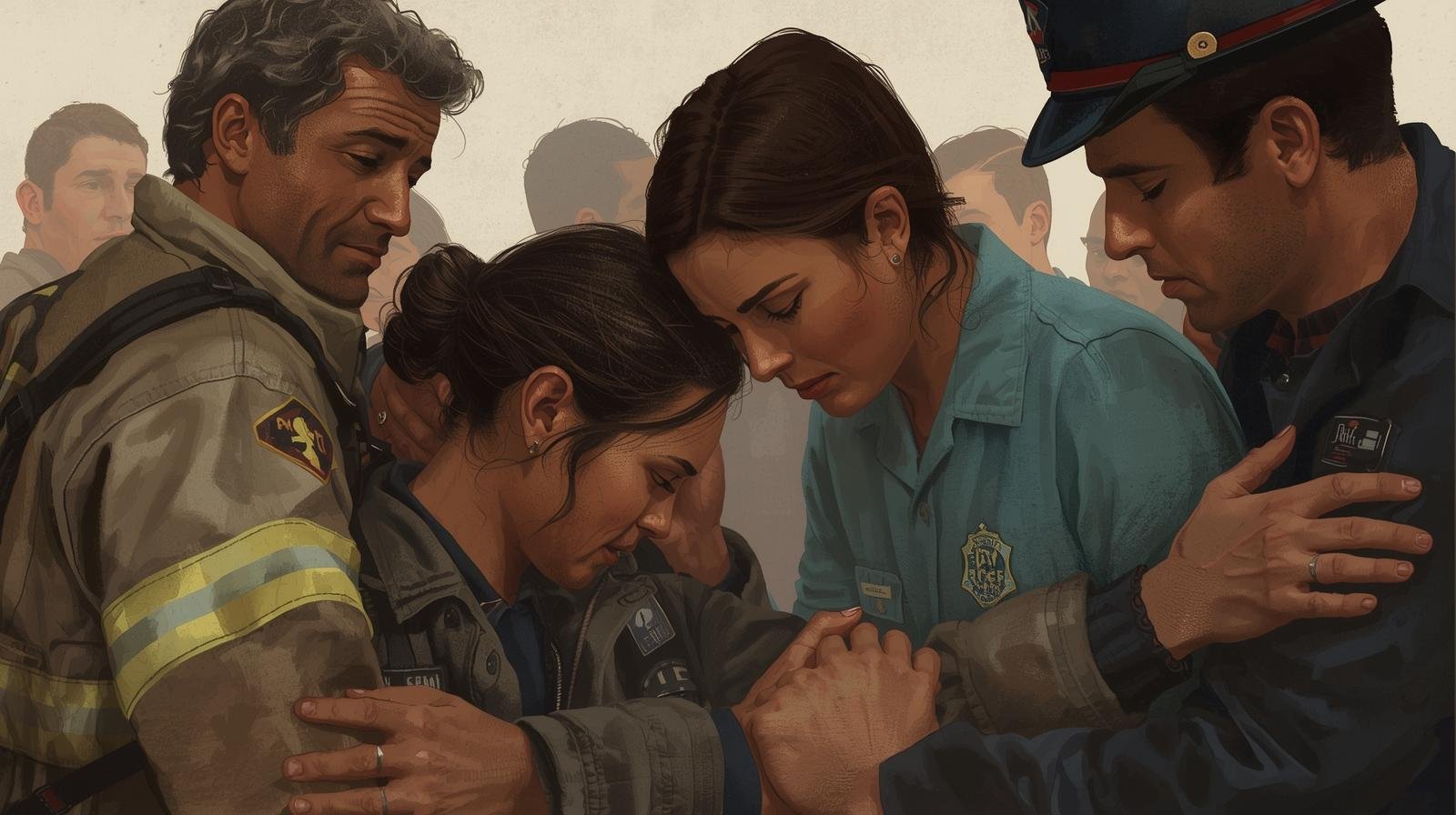
The Balance You’re Looking For
Most people I work with aren’t trying to change who they are.They don’t want to lose their awareness, their instincts, or their ability to handle high-pressure situations.
What they want is balance. They want to be able to walk into their job with clarity and confidence and also come home and feel like themselves again. To be present with their family. To actually rest. To not feel like they’re constantly “on.”That’s the work.
Not removing what makes you effective but helping you have choice and flexibility in how and when those parts of you show up.
A Space That Understands
There are parts of this work that don’t need to be explained here. The environment.The expectations. The things you carry that don’t always have a place to go. This space is built with that understanding already in place.
At the same time, it’s a place where we can begin to gently look at what’s no longer serving you outside of that role without judgment, without pressure, and without taking away the parts of you that have kept you safe.
You Don’t Have to Do This Alone
Support can come from multiple places and it doesn’t have to be all on you. Resources like CopLine provide confidential, peer-based support from individuals who have lived this work and understand it from the inside. There are also brain health tools, education, and self-assessments that can help you better understand what your system has been carrying over time. We can integrate these into your sessions so you have support both inside and outside of therapy.
If You’re Even Thinking About ThisThat matters. Because usually, that thought doesn’t come out of nowhere. It comes from a part of you that knows something could feel different. You don’t have to have it all figured out. You don’t have to be at your limit. And you don’t have to be sure this will work. You just have to be willing to start. At Uncomfortably Comfy Couch, this is a space where growth happens in the uncomfortably Comfy places but it’s also where things start to feel more manageable, more grounded, and more like you again.