

Early Signs of Autism in Boys & Girls
Understanding Subtle Differences Through a Developmental and Therapeutic Lens
Autism is often discussed as something that can be identified early in childhood, yet for many families, the first signs are not immediately clear. Rather than appearing in a single moment, early signs tend to emerge gradually through patterns in communication, behavior, play, and sensory processing. Modern research continues to emphasize that autism is a spectrum and that its presentation can vary widely especially when comparing how it appears in boys and girls.
Understanding Autism as a Neurodevelopmental Difference
Autism is a neurodevelopmental condition that influences how a person experiences the world, communicates, and interacts socially. It is not something that needs to be “fixed,” but rather understood and supported in ways that align with each individual’s needs.
Current research highlights that early identification and support can significantly improve developmental outcomes, particularly in areas such as communication, emotional regulation, and adaptive functioning. Importantly, autism exists on a spectrum, meaning no two individuals will present in exactly the same way.
Common Early Signs of Autism
Early signs may be noticeable as early as infancy or toddlerhood, though they can become more apparent as social and communication demands increase. Some of the commonly observed early indicators include:
Limited or inconsistent eye contact
Not consistently responding to their name
Differences in pointing, showing, or sharing attention
Delays in speech or differences in communication style
Repetitive movements or play patterns
Strong preferences for routines or predictability
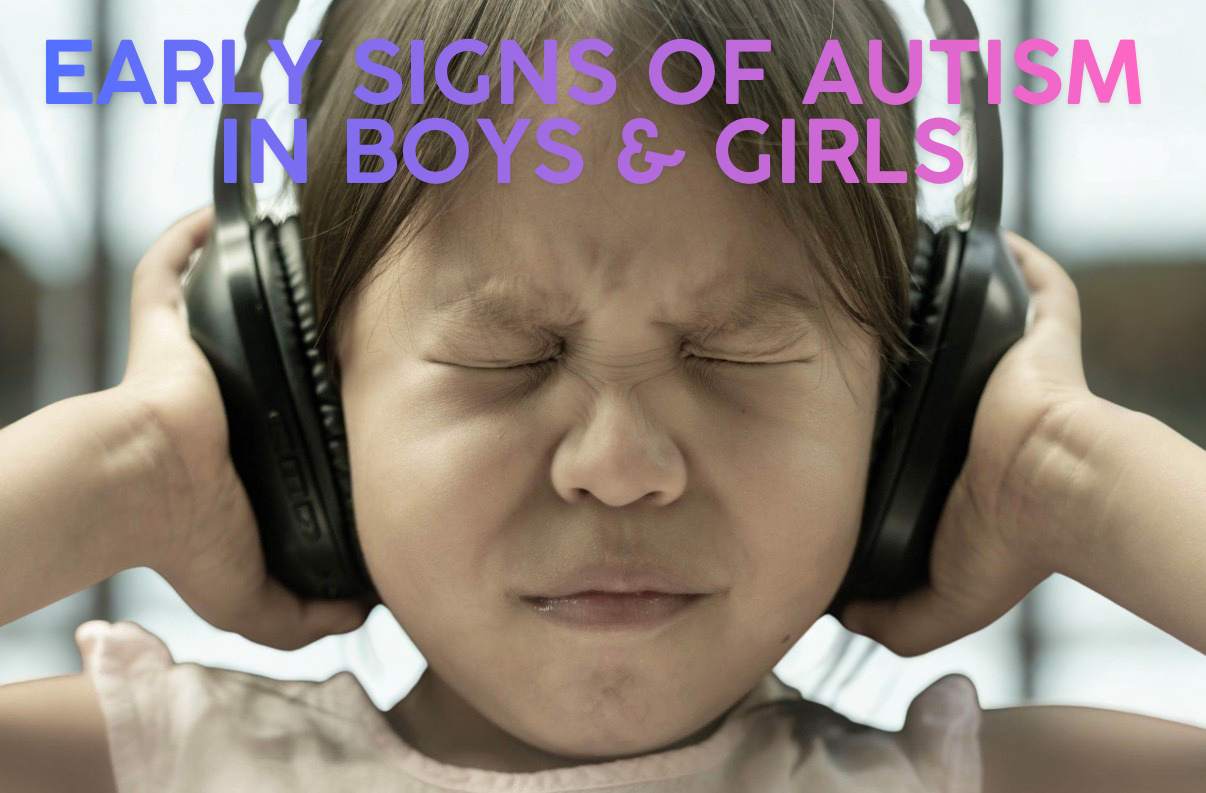
Sensory sensitivities, such as distress with certain sounds, textures, or clothing
Reduced interest in typical back-and-forth social interactions
It is important to remember that the presence of one or two of these traits does not necessarily indicate autism. Rather, clinicians look for patterns over time across multiple developmental domains.
Why Autism Can Look Different in Boys and Girls
Historically, autism research and diagnostic criteria were largely based on how autism presented in boys. As a result, many girls have been underdiagnosed or identified later in life. Emerging research continues to show that while core traits of autism are shared across genders, the outward expression can differ in meaningful ways.
Early Presentation in Boys
In many boys, early signs of autism may be more outwardly visible. These can include noticeable differences in social engagement, such as limited eye contact, reduced response to social cues, and more obvious repetitive behaviors. Interests may appear highly focused or intense, and differences in communication may be more readily recognized by caregivers or professionals.
Because these behaviors tend to align more closely with traditional diagnostic frameworks, boys are often identified earlier.
Early Presentation in Girls
In girls, autism may present more subtly, which can make early identification more challenging. Many girls develop strategies to adapt to social environments, sometimes referred to as masking or camouflaging. This can include mimicking peers, rehearsing social scripts, or suppressing behaviors that might otherwise draw attention.
Girls may appear socially engaged on the surface while internally experiencing difficulties with social understanding, sensory overload, or emotional regulation. Their interests may also appear more socially typical, even if they are pursued with unusual intensity.
Research suggests that autistic girls are more likely to internalize distress, which may present as anxiety, perfectionism, or withdrawal rather than overt behavioral differences. Because of this, their needs can sometimes be overlooked or misinterpreted.
The Role of Masking and Its Impact
Masking refers to the conscious or unconscious effort to hide autistic traits in order to fit into social expectations. While masking can help individuals navigate social environments, it often comes at a cost.
Over time, masking may contribute to:
Increased anxiety or burnout
Emotional exhaustion
Delayed diagnosis
Difficulty recognizing one’s own needs
Understanding masking is an important part of supporting autistic individuals, particularly girls, as it helps explain why some children may appear to be coping well externally while struggling internally.
Why Early Recognition Matters
Early recognition does not mean labeling a child it means understanding how they experience the world so that support can be tailored appropriately. When autism is identified early, families and professionals can implement strategies that support communication, sensory regulation, and emotional development.
Support may include:
Speech and language therapy
Occupational therapy for sensory integration
Social-emotional support
Parent coaching and education
School-based accommodations
The goal is not to change who the child is, but to create environments where they can thrive.
A Therapeutic Perspective for Families
For many parents, noticing early signs of autism can bring a mix of emotions curiosity, concern, and sometimes uncertainty about what comes next. It can be helpful to reframe these observations not as problems, but as information.
Every behavior a child displays is a form of communication. Sensory sensitivities may indicate overwhelm. Repetitive behaviors may provide regulation. Differences in social engagement may reflect unique ways of processing interaction.
Approaching these signs with curiosity rather than judgment allows caregivers to respond with greater empathy and effectiveness.
Final Thoughts
Early signs of autism can be subtle, especially in girls, and may not always align with common expectations. As research continues to evolve, there is growing awareness that autism is often underrecognized in certain populations due to differences in presentation and diagnostic bias.
Recognizing these early differences is not about categorizing children—it is about understanding them more deeply. When children are supported in ways that honor their neurodevelopmental profile, they are more likely to feel secure, connected, and capable of expressing themselves in meaningful ways.
At its core, this is about meeting children where they are, with compassion, awareness, and the intention to support their unique path of development.
