

Teens, Substance Use, and the Conversations Parents Need to Have
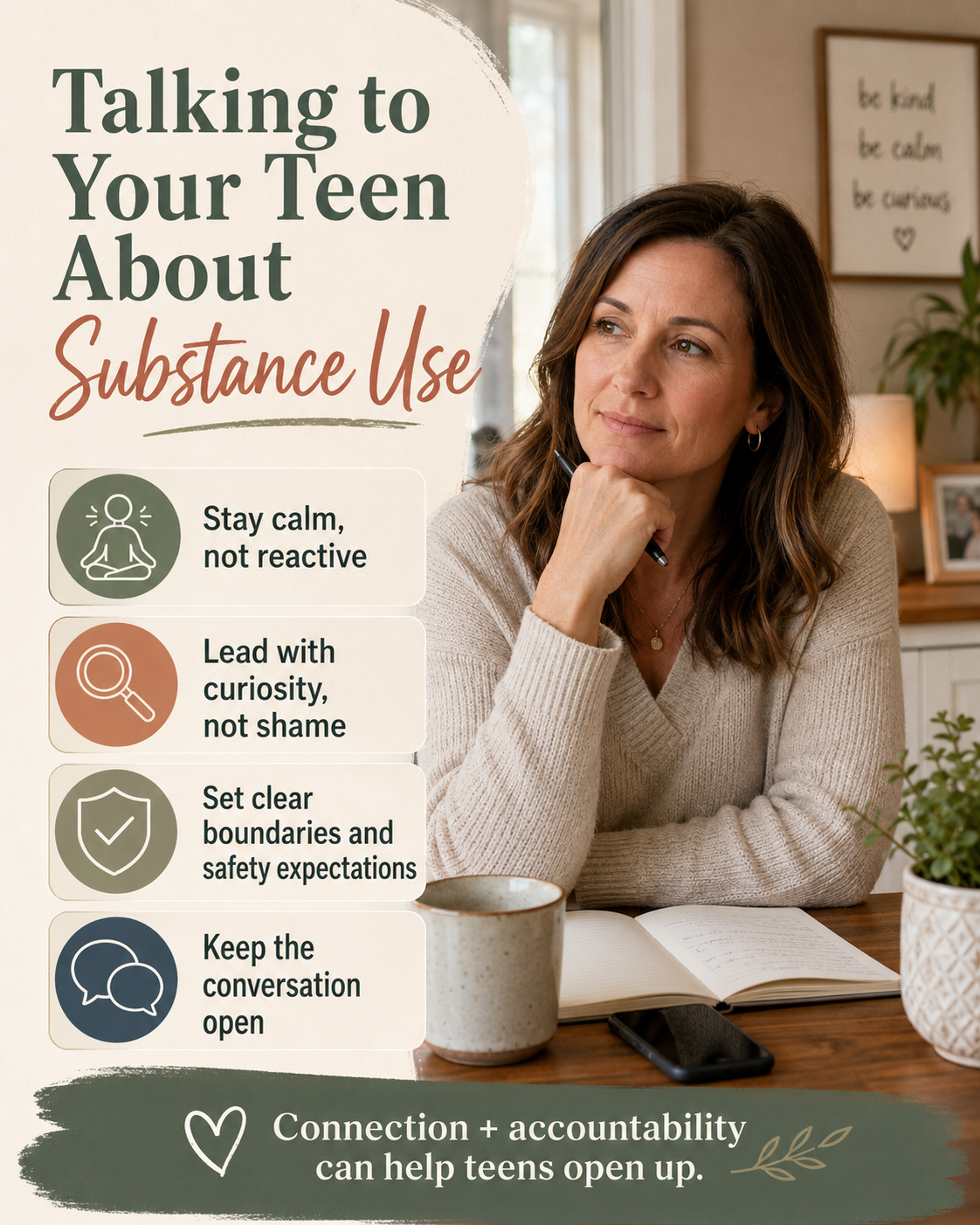
Teen substance use is one of those parenting topics that can bring fear to the surface quickly. Fear for their safety. Fear of what they are hiding. Fear of who they are spending time with. Fear that if you do not react strongly enough, your teen may think their choices are acceptable. And that fear makes sense. Parents are not “overreacting” for being concerned. Substance use during adolescence matters because the teen brain is still developing, especially in areas connected to impulse control, decision-making, emotional regulation, and risk assessment. Research from the National Institute on Drug Abuse notes that adolescent substance use can affect the developing brain, and the CDC links youth substance use disorders with increased physical, mental, and overall health risks.
At the same time, the way parents respond matters deeply. When a parent discovers vaping, drinking, cannabis use, pill misuse, or experimentation with peers, it is very easy to move straight into panic mode. That may look like yelling, lecturing, searching everything, threatening extreme consequences, or demanding immediate honesty while the teen is already feeling cornered. The intention is protection, but the impact can sometimes be more secrecy. Teens who feel shamed or attacked often do not become more open. They become more guarded. They may minimize, lie, shut down, or protect the behavior because the conversation no longer feels safe enough for truth.
This does not mean parents should ignore substance use, excuse it, or treat it like “normal teen behavior” that does not need attention. It means parents have to hold two truths at the same time: substance use needs clear boundaries and safety expectations, and teens need enough emotional safety to be honest about what is happening underneath the behavior. This is where connection and accountability have to work together. A therapeutic response is not passive. It is calm, curious, structured, and firm.
From a developmental perspective, teens are wired to seek novelty, belonging, independence, and peer approval. Their brains are still learning how to weigh long-term consequences against short-term relief or social reward. This is one reason substance use can become especially concerning during adolescence. A teen may understand that something is risky, but in the moment, the pull of fitting in, escaping distress, feeling good, or avoiding embarrassment can feel stronger than the abstract idea of future consequences. That does not mean teens are incapable of making healthy choices. It means they need guidance, repetition, structure, and adults who can help them slow down and think when their nervous system is moving fast.
For some teens, substance use begins with curiosity or peer pressure. For others, it becomes a way to manage anxiety, depression, trauma, loneliness, overwhelm, boredom, impulsivity, or emotional pain they do not know how to name. Psychoeducation matters here because when parents only see the behavior, they may miss the function of the behavior. In therapy, we often ask, “What is this doing for the person?” Not because the behavior is healthy, but because every repeated behavior is meeting some kind of need. It may be numbing. It may be avoidance. It may be social connection. It may be stimulation. It may be temporary relief. If we do not understand the function, we may only punish the symptom while the underlying need stays untreated.
This is why curiosity is so important. A parent might start with, “I’m not here to attack you. I’m here because I love you, and your safety matters. I need us to talk honestly about what has been going on.” That kind of opening communicates care and seriousness at the same time. It helps your teen know this is not a free pass, but it is also not a character assassination. Shame says, “You are bad.” Accountability says, “This choice matters, and we need to understand it so we can make a safer plan.”
A more helpful conversation may include questions like: “What has been going on for you lately?” “What was happening before you used?” “Was this about stress, curiosity, pressure, wanting to fit in, or wanting to feel different?” “How often has this been happening?” “Who are you usually with?” “Do you feel like you can say no?” “Do you feel in control of it?” “What do you need help with that you may not know how to say out loud?” These questions are not meant to interrogate. They are meant to gather information. The response needed for one-time experimentation may look different from the response needed when a teen is using regularly to cope with emotional distress.
Parents also need to regulate themselves before entering the conversation. This does not mean you have to be perfectly calm or robotic. It means you pause long enough to make sure fear is not driving the entire conversation. When parents are highly escalated, teens often become escalated too. They may fight, flee, freeze, or shut down. A grounded parent can set a firmer limit than a panicked parent because the message is clearer: “I love you. I am taking this seriously. I am not going to shame you. And we are going to make changes to keep you safe.”
Boundaries are still necessary. Substance use may require increased supervision, changes in social plans, limits around parties or sleepovers, checking in more often, removing access, communicating with other parents, monitoring safety, or seeking professional support. The difference is that boundaries should be connected to safety and repair, not humiliation. Instead of, “You ruined everything and I can never trust you again,” a parent might say, “Because safety and trust have been impacted, we are going to make some changes. This is not about punishing you forever. This is about helping you rebuild trust and making sure you are safe.”
It is also important to talk with teens before they are in high-pressure situations. SAMHSA’s “Talk. They Hear You.” campaign encourages parents and caregivers to start and continue conversations about alcohol and other substance use rather than relying on one big lecture. (SAMHSA) Teens need practical exit plans. They need to know what to do if they are at a party and feel unsafe, if someone offers them something, if a friend is impaired, or if they need a ride. A parent can say, “If you are ever in a situation where substances are involved and you feel unsafe, you can call me. We will still talk about it, but your safety comes first.” That message does not remove accountability. It keeps the door open when safety matters most.
Parents also need to understand that prevention is not just about warning teens of consequences. Protective factors matter. Research on adolescent substance use consistently points to the importance of parental monitoring, supportive relationships, self-control skills, school connection, and prosocial peer environments as protective factors. (Springer) In real life, this means knowing who your teen is with, where they are going, how they are doing emotionally, what stressors they are carrying, and whether they have healthy ways to cope. It also means being willing to have repeated conversations, not just one intense talk after something goes wrong.
When substance use shows up alongside major mood changes, increased lying, isolation, school decline, risky behavior, emotional volatility, or signs that your teen cannot stop, it may be time to seek professional support. The American Academy of Pediatrics emphasizes screening, non-stigmatizing language, brief intervention, referral when needed, and harm-reduction-informed care for adolescent substance concerns. Therapy can help teens identify what is underneath the behavior, build emotional regulation skills, strengthen distress tolerance, and practice safer decision-making. It can also help parents respond from steadiness instead of staying trapped in cycles of fear, conflict, and control.
The goal is not to make parents responsible for controlling every choice their teen makes. That is not realistic, and it often burns everyone out. The goal is to build a family environment where hard conversations can happen earlier, safety is taken seriously, and teens know they can come to their parents before things get bigger. Teens need to know, “My parent can handle the truth,” and they also need to know, “My parent will not ignore something that could hurt me.”
This is the uncomfortably comfy work of parenting. It is leaning into the hard topic instead of avoiding it. It is choosing curiosity before assumption. It is setting boundaries without shame. It is remembering that connection and accountability are not opposites. You can validate your teen’s emotions and still address unsafe behavior. You can be compassionate and still be firm. You can love them deeply and still say, “This has to change.”
A steady message might sound like: “I love you too much to avoid this. I will not ignore something that could hurt you. I am not here to shame you, but I am here to help you face it. We are going to figure out what needs to change, and we are going to make a plan that keeps you safe.”
Teen substance use is scary, but silence does not protect teens. Shame does not usually create honesty. Calm, consistent, connected conversations paired with clear boundaries give families a better chance of understanding what is happening and intervening in a way that supports real change.
