
When Your Brain Hits "Go" Before You Do: Understanding Impulsivity Across the Neurodivergent Lifespan
When Impulsivity Turns Into Bigger Risks
ou hit send... and immediately wished you hadn't.
You add one thing to your online cart and somehow end up checking out with six.
You interrupt someone you genuinely care about, then spend the rest of the day replaying the conversation.
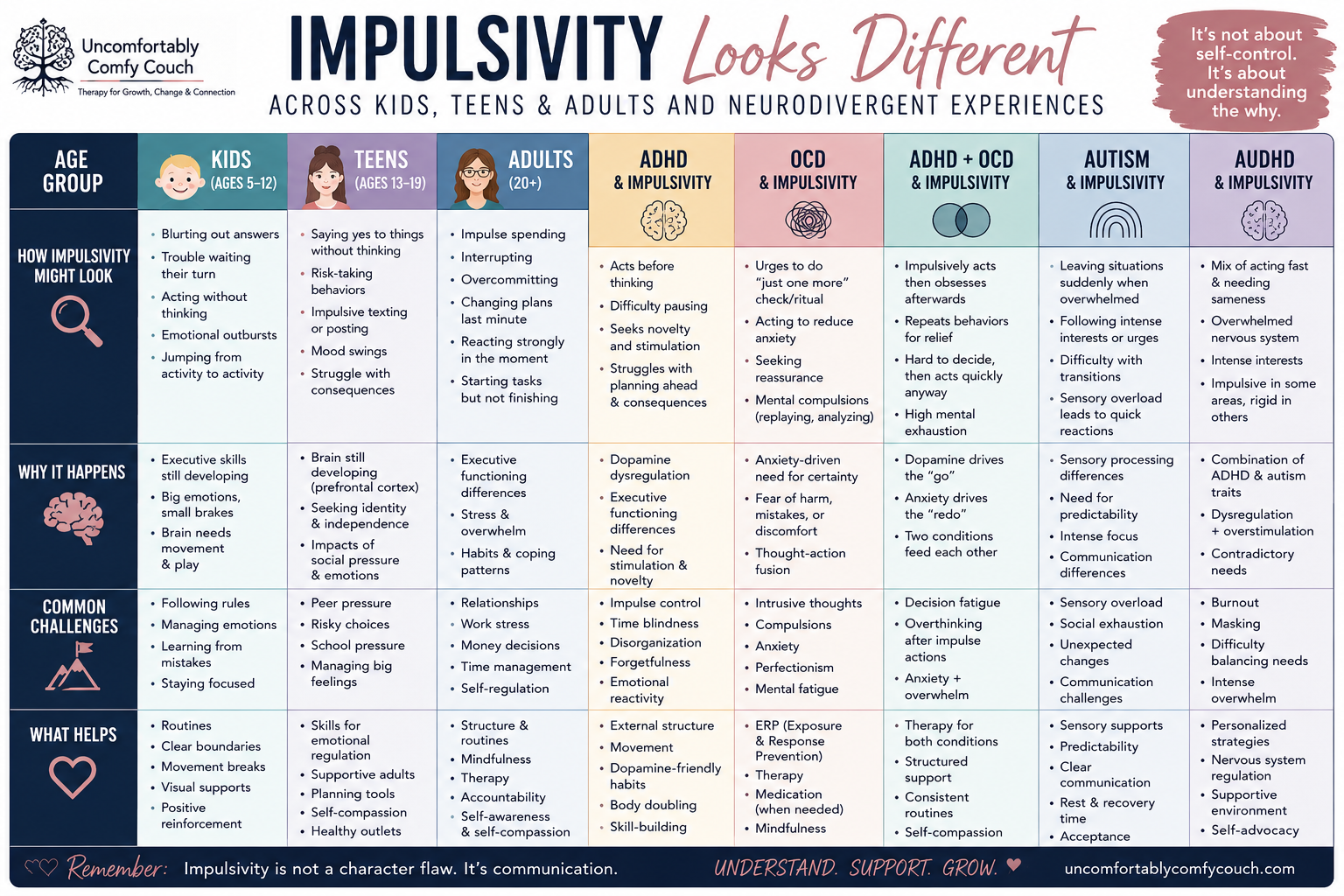
If you've ever found yourself wondering, "Why did I do that?" you're far from alone.As children grow into teenagers and adults, impulsivity doesn't disappear it often changes form. Instead of blurting out an answer in class, it may become saying yes to something before thinking it through. Instead of climbing furniture, it may become driving too fast, making an impulsive purchase, or sending a text in the heat of the moment. Sometimes those split-second decisions carry much bigger consequences. For some teens and adults, impulsivity can increase vulnerability to:
Experimenting with alcohol or drugs
Drinking more than intended
Vaping because friends are
Reckless driving
Unsafe sexual decisions
Gambling
Emotional spending
Quitting jobs impulsively
Jumping into relationships too quickly
Difficulty stopping once something feels rewarding
This doesn't mean every neurodivergent person will struggle with these behaviors. It means the combination of novelty-seeking, dopamine differences, emotional intensity, and difficulty pausing can make immediate rewards feel especially powerful. Research has consistently found that individuals with ADHD are at increased risk for substance misuse, particularly when ADHD is untreated. One reason is that alcohol, nicotine, cannabis, and other substances can temporarily change how the brain feels, even though they often worsen executive functioning, sleep, mood, and emotional regulation over time. For some, substances become less about "getting high" and more about trying to quiet a brain that never seems to slow down. That distinction matters. It shifts the conversation from "What's wrong with you?" to "What is your brain trying to solve?"
Executive functioning is one of those terms that gets used frequently in psychology, but it doesn't always help people understand what it actually means. I often describe it as the brain's management system. It's the part of your brain that's constantly organizing, prioritizing, shifting attention, planning ahead, regulating emotions, and helping you pause before acting. Think of it as the conductor of an orchestra. When it's working well, all of the different sections of the brain communicate together. When executive functioning becomes overwhelmed or works differently as it often does in ADHD, that communication can become much more difficult. The result isn't a lack of intelligence or motivation. Instead, everyday tasks like stopping yourself before speaking, remembering what you walked into a room for, resisting distractions, or following through on plans suddenly require far more effort than most people realize.
ADHD, Autism, and OCD: They Can Look Similar , But They're Not the Same
One of the reasons so many people wonder whether they have ADHD, autism, OCD, or all three is because some of the outward behaviors can look surprisingly similar. Someone may repeatedly check the stove. Someone else may repeatedly check because they forgot whether they checked the first time. From the outside, those behaviors can appear identical. The reason behind them is very different.
ADHD
The brain often struggles with inhibition, working memory, and executive functioning. The thought process is often: "I acted before I had time to think."
One of the core features of ADHD is difficulty with executive functioning, and this is one of the biggest reasons impulsivity can feel so frustrating. Executive functioning isn't about intelligence or motivation it's about the brain's ability to manage itself. These skills help us pause before reacting, think through consequences, prioritize what matters most, regulate emotions, and shift our attention when needed. For someone with ADHD, that internal "management system" may not consistently step in before an action happens. Imagine driving a car with a powerful engine but brakes that take a little longer to engage. The car isn't broken, and the driver isn't trying to make poor decisions. It simply requires more intentional strategies to slow down when it matters most. This is why someone with ADHD may know exactly what they should do, yet still find themselves interrupting a conversation, making an impulse purchase, agreeing to too many commitments, or reacting emotionally before they've had a chance to think it through. Understanding this difference is important because it shifts the conversation away from blaming character and toward recognizing how the brain is functioning. When we understand executive functioning, we stop asking, "Why don't they have more self-control?" and start asking, "What support does their brain need to create a little more pause?" That shift often becomes the foundation for lasting growth.
Autism
Impulsivity can occur, but it is often connected to sensory overwhelm, emotional overload, difficulty shifting attention, or acting on a strong interest rather than seeking novelty itself.
Autism and impulsivity have a unique relationship because behaviors that appear impulsive are not always driven by impulsivity itself. Many autistic individuals are responding to sensory overload, difficulty shifting attention, emotional overwhelm, or a need for predictability rather than acting without thinking. For example, an autistic child who suddenly leaves a noisy classroom or an autistic adult who walks out of a crowded gathering may appear impulsive to others. In reality, their nervous system may have reached its limit. What looks like an impulsive decision is often an attempt to regulate overwhelming sensory or emotional input before it becomes too much. This is why understanding the "why" behind a behavior is so important. Rather than asking whether someone is being impulsive, it can be more helpful to ask what their nervous system is trying to communicate. That shift often leads to greater compassion and more effective support.
Understanding Autism and Impulsivity
Autism and impulsivity have a unique relationship because behaviors that appear impulsive are not always driven by impulsivity itself. Many autistic individuals are responding to sensory overload, difficulty shifting attention, emotional overwhelm, or a need for predictability rather than acting without thinking.
For example, an autistic child who suddenly leaves a noisy classroom or an autistic adult who walks out of a crowded gathering may appear impulsive to others. In reality, their nervous system may have reached its limit. What looks like an impulsive decision is often an attempt to regulate overwhelming sensory or emotional input before it becomes too much.
This is why understanding the "why" behind a behavior is so important. Rather than asking whether someone is being impulsive, it can be more helpful to ask what their nervous system is trying to communicate. That shift often leads to greater compassion and more effective support.
OCD
OCD is usually not about impulsivity. It's about anxiety, intrusive thoughts, uncertainty, and compulsions aimed at reducing distress. Someone with OCD often isn't acting too quickly. They're often thinking too much, becoming stuck in repetitive mental or behavioral loops. A person with OCD may spend hours checking, reviewing, researching, confessing, or mentally replaying situations because their brain keeps asking, "But what if...?"
At first glance, ADHD and OCD can sometimes look surprisingly similar, but the reason behind the behaviors is often very different. Someone with ADHD may act before thinking because their brain struggles to create a pause between the impulse and the action. Someone with OCD is often experiencing the opposite. Instead of moving too quickly, their brain becomes stuck in intrusive thoughts and uncertainty.
For example, someone with ADHD might impulsively send a text and move on. Someone with OCD may spend the next several hours rereading that same text, wondering if they said the wrong thing or searching for reassurance that everything is okay. Someone with ADHD may forget whether they locked the door because of working memory challenges, while someone with OCD may remember locking it but still feel compelled to check again because the uncertainty feels overwhelming.
The two conditions can also occur together, making life feel especially exhausting. A person may act impulsively because of ADHD and then spend hours obsessing over the consequences because of OCD. Understanding which brain process is driving the behavior is important because while the behaviors may appear similar on the outside, they require different approaches to treatment and support.
When ADHD and OCD Occur Together
Living with both ADHD and OCD can feel like having one part of your brain constantly pressing the gas pedal while another is pulling the emergency brake. ADHD often creates challenges with executive functioning, making it harder to pause, organize, prioritize, or think through consequences before acting. OCD, on the other hand, is driven by intrusive thoughts and an intense need for certainty, leading the brain to replay, question, and analyze what has already happened. Together, these conditions can create an exhausting cycle where impulsive actions are followed by hours of overthinking.
For example, someone may impulsively interrupt a conversation, send a text without thinking, or make an unplanned purchase because of ADHD. Instead of moving on, OCD may take over, replaying the interaction repeatedly, questioning whether they offended someone, worrying they made the wrong decision, or seeking reassurance that everything is okay. The impulsive moment may last only seconds, but the mental replay can continue for hours or even days.
This combination can also make decision-making incredibly difficult. ADHD may push someone toward acting quickly, while OCD pulls them back into doubt, uncertainty, and repeated checking. One moment they may make a decision without fully thinking it through, and the next they may spend hours researching, comparing options, or searching for reassurance that they made the "right" choice. From the outside, this can look confusing because the person appears both impulsive and indecisive. In reality, both brain processes are happening at the same time.
Understanding how ADHD and OCD interact is important because treatment often needs to address both conditions rather than assuming one explains everything. Recognizing whether a behavior is being driven by impulsivity, intrusive thoughts, or a combination of both allows for more targeted strategies and, perhaps most importantly, greater self-compassion. Instead of asking, "Why can't I just get it together?" the question becomes, "Which part of my brain is asking for support right now?" That shift can be a powerful first step toward understanding yourself with more curiosity and less judgment.
When ADHD and Autism Occur Together (AuDHD)
Many people identify with both ADHD and autism, a combination often referred to as AuDHD. While these conditions share some overlapping traits, they can also create experiences that seem contradictory. Someone may crave novelty because of ADHD while also relying on routines to feel regulated because of autism. They may be impulsive in some situations yet become overwhelmed by unexpected changes in others. They may love spending time with people they care about but need significant time afterward to recover from the sensory, social, and cognitive demands.
Impulsivity in AuDHD is often more complex than in ADHD alone because it is influenced not only by executive functioning and dopamine regulation but also by sensory processing, emotional intensity, and nervous system regulation. An individual may make a quick decision because it feels exciting, leave a situation suddenly because it has become overstimulating, or react emotionally because both overwhelm and impulsivity are happening at the same time. Understanding how these two neurotypes interact helps explain why AuDHD often feels less like experiencing ADHD plus autism and more like a unique experience with its own strengths, challenges, and support needs.
One Final Thought...
If there's one thing I hope you take away from this article, it's this:
Your brain isn't trying to work against you. It's trying to work for you in the best way it knows how.
Impulsivity isn't a reflection of your character, your intelligence, or your ability to succeed. It's one way your brain responds to the world around it. Sometimes that response creates challenges. Sometimes it creates incredible strengths. The same brain that blurts out ideas may also be the one that thinks outside the box. The same brain that chases new experiences may also be the one that creates businesses, invents solutions, starts movements, and inspires change. The same brain that feels emotions intensely may also love deeply, advocate fiercely, and connect with others in ways that are genuine and meaningful. Not every impulsive decision is harmful. Sometimes saying yes to an adventure, speaking up for someone who needs support, taking a creative risk, or following an exciting new idea leads to some of the most meaningful moments in our lives. The goal isn't to eliminate spontaneity or change who you are. The goal is learning when your quick spark is your greatest strength and when your brain might benefit from a little more pause. Therapy isn't about becoming less neurodivergent. It isn't about becoming someone else. It's about understanding how your brain works, building skills that support it, and creating a life that works with your neurodivergence instead of constantly fighting against it. Because when we replace shame with understanding, criticism with curiosity, and judgment with compassion, we create something far more powerful than self-control.
We create self-awareness. And self-awareness is where lasting change begins. So the next time you find yourself asking “Why did I do that?"
Try asking instead,
"What was my brain trying to do for me in that moment?"
That one small shift has the power to change not only how you understand your impulsivity, but how you understand yourself.
At Uncomfortably Comfy Couch, that's what we believe healing looks like not becoming someone different, but learning to embrace who you are while building the tools to thrive. Sometimes the most meaningful growth happens when we lean into the uncomfortably comfy places where understanding leads to connection, resilience, and lasting change.